
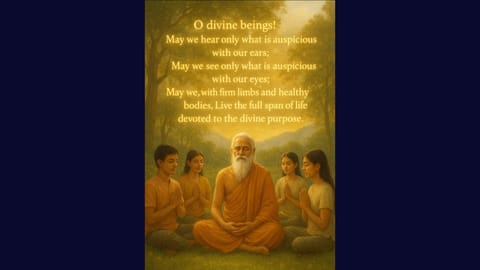

Positive Vision of Sanātana Dharma-Art of Seeing, Hearing, and Speaking the Auspicious
Video by Jiva Balance
This short Dhanurvidyā session starts with the group chanting the Śānti Mantra "Bhadraṁ karṇebhiḥ śṛṇuyāma devāḥ." The teacher then explains what the prayer means: may I hear what is auspicious, see what is auspicious, speak it and do it. Talking to the children in the group, he compares this with the three monkeys of India. One monkey covers his eyes, one his ears and one his mouth, saying he will not see, hear or speak anything bad. The three monkeys are worded in the negative, while the Upanishadic prayer is worded in the positive. The teacher says that looking for the positive changes a person's whole personality. Such a person sees opportunities and remarkable human beings. Simply refusing to say anything bad does not do this. He ends by asking the children to notice this difference and what it means for spiritual life.
- Channel
- Jiva Balance
- Type
- Video
- Published
- 9 Nov 2025
- Language
- English
- Categories
- Soul, Mind
About
In this Dhanurvidyā session, the Śānti Mantra — “Bhadraṁ karṇebhiḥ śṛṇuyāma devāḥ” — was chanted by all. This mantra invites us to hear the good, see the good, and speak the good, turning our senses into pathways of light. Many recall the three monkeys — “Don’t see bad, don’t hear bad, don’t speak bad.” While it sounds moral, it reflects a defensive and negative stance — a world to be avoided. In contrast, the Śānti Mantra of Sanātana Dharma inspires a life-affirming vision: To actively look for goodness, listen for harmony, and express auspiciousness (Bhadram) in word and deed. This is the eternal teaching of our tradition — not to escape the world, but to elevate it through awareness, reverence, and positivity. Hari aum! 🌺
Topics: Bhadraṁ karṇebhiḥ śṛṇuyāma devāḥ, Shanti mantra, three monkeys, auspiciousness, bhadram