
"Energy" is one of the most used and least defined words in wellness today. People speak of feeling drained by certain people, uplifted in certain places, or "heavy" after a difficult week. Energy healing tries to work directly with that felt sense. For a curious newcomer, it can be hard to know what to make of it. This article offers a grounded introduction, drawing on traditional ideas and content available on Platonix.
The traditional background: prana and the subtle body
In Indian traditions, the idea of subtle energy is old and carefully mapped. Vedanta describes the human being in terms of three bodies; the subtle body includes the five prāṇas, the vital forces that animate breathing, digestion, circulation and movement. The Jiva Balance talk on the subtle body (Day 104) explains how, in daily life, we identify with the body, this vital energy, the mind and the intellect, together forming our sense of individuality.
Yoga traditions add the idea of nāḍīs, subtle channels through which prana flows, and cakras, centres along the spine. Practices such as pranayama, mantra, meditation and certain postures are traditionally understood to purify and balance this subtle system.
Other cultures have parallel ideas, such as qi in Chinese traditions.
What "energy healing" usually means today
Under the umbrella term you may encounter:
- Hands-on or hands-near practices, where a practitioner places hands on or near the body.
- Breath and pranayama, consciously working with prana through breathing.
- Sound and mantra, using vibration and chanting.
- Meditative practices, such as visualisation, forgiveness or cleansing meditations.
- Music for meditation, like the long Karmic Cleansing Music Meditation on the Vegetarian Meditation Channel, intended as a background for deep relaxation and inner work.
These practices vary widely in origin and approach. Some are part of living traditions; others are modern syntheses.
The inner dimension
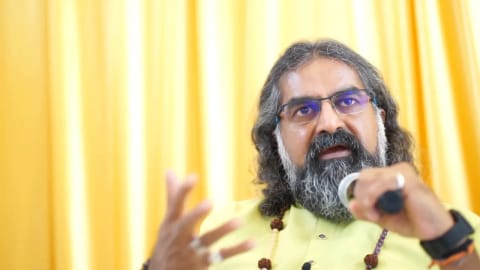
Many teachers emphasise that the deepest "healing" is inner. In a short video on Platonix, What is the key to any healing, Mohanji discusses what he sees as the key element in a person's healing journey and the attitudes that can block it. Whatever one's view of subtle energy, this emphasis on inner attitude, acceptance, openness and letting go is common across traditions.
Approaching energy work with discernment
Because the field is so varied, discernment matters. Some questions worth asking:
About the practice
- Does it come from a recognisable tradition, or is it a modern method? Both can be valuable, but it helps to know.
- Is it explained clearly, without vague or grandiose language?
- Does it ask you to stop medical treatment? That is a serious red flag.
About the practitioner
- Do they make promises of cures? Responsible practitioners do not.
- Do they respect your medical care and encourage you to consult professionals?
- Are their fees transparent and reasonable?
- Do they ask for consent before touch, and respect your boundaries?
- Do they encourage your independence, or create dependence?
About your own experience
- Do you feel calmer, clearer and more resourced afterwards?
- Do you feel pressured, confused or afraid? If so, step back.
Practices you can explore safely on your own
Several traditional practices work with subtle energy in a simple, self-directed way:
- Breath awareness. Sit quietly and observe the natural breath for ten minutes.
- Gentle pranayama. Alternate-nostril breathing without breath retention, or bhramari, the humming breath.
- Body scan. Move attention slowly through the body, noticing sensations without trying to change them.
- Time in nature. Many traditions regard sunlight, fresh air, water and earth as sources of prana. A walk in the forest or along a lake is the simplest energy practice of all.
- Rest. Adequate sleep and a balanced routine are, in traditional terms, the foundation of healthy prana.
A short self-practice: breath, body, release (10 minutes)
- Ground. Sit with both feet on the floor. Feel the contact with the ground and the support of the seat.
- Breathe. Take ten slow breaths, letting the out-breath be a little longer than the in-breath.
- Scan. Move attention from the feet to the head. Where do you feel tension, heaviness or numbness? Where do you feel ease or warmth? Simply notice.
- Release. With each out-breath, imagine softening the areas of tension, as if they were melting a little.
- Rest. Sit for a minute with your hands resting in your lap, noticing how you feel overall.
Whatever your view of subtle energy, this kind of practice develops body awareness and a sense of being resourced, which many people find valuable in itself.
Where energy work fits
A balanced view might be this: energy-oriented practices can support relaxation, self-awareness and a sense of wellbeing for many people, and they connect with profound traditional understandings of the human being. They are not substitutes for medical diagnosis or treatment. The healthiest approach usually combines appropriate medical care, healthy living, and contemplative or energy practices that you find meaningful.
If you have a physical or mental health condition, please consult a qualified health professional, and let any practitioner you work with know about it.
Explore on Platonix
Watch Mohanji's short What is the key to any healing on Platonix, explore the Jiva Balance talks on the subtle body, or join a live breath, sound or meditation session to experience energy work in a guided, grounded way.